Earthly Wabi-Sabi
A Spiritual Sanctuary for a Solitary Urban Woman
The owner, a young woman living alone in the city, commissioned us to strip the original developer’s finish and reimagine this space as her private sanctuary. Here, amidst towering skyscrapers, she has carved out a corner for reconciling with the world. This is no escape, but a braver form of dwelling—cultivating stillness within noise, practicing restraint amidst abundance.
The Boundary Between Engagement and Retreat
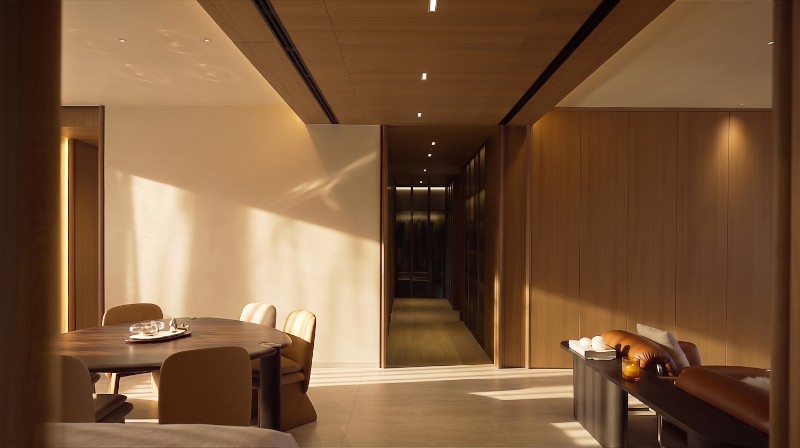
Beyond the dark timber door lies a corridor of wardrobes, a tunnel through time. Neatly arranged garments represent her many social roles—professional, festive, daily. These “skins of society” are gently sealed away, honoring external order while preserving intimate ritual. The faint glow at the corridor’s end serves as metaphor: through layers of identity, one finally arrives at the self that needs no performance.
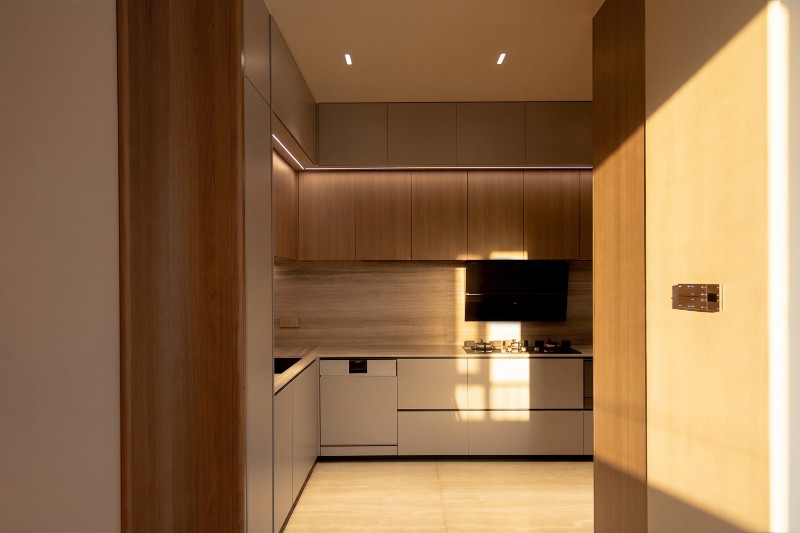
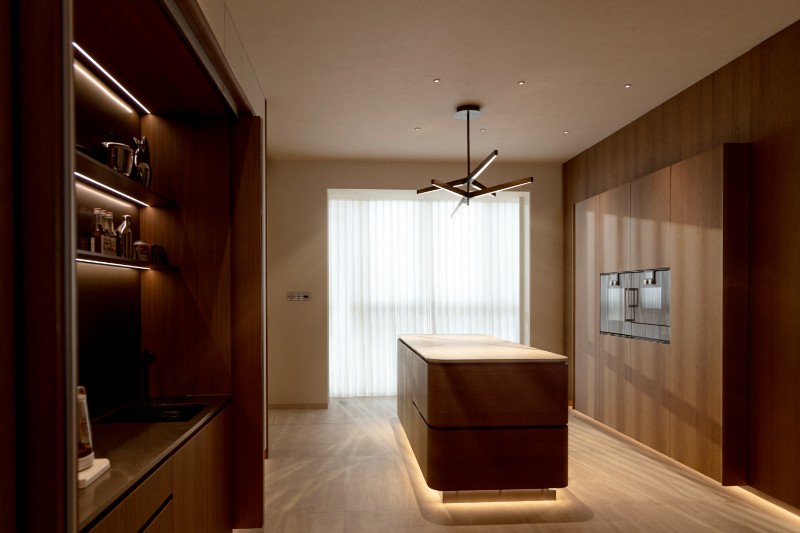
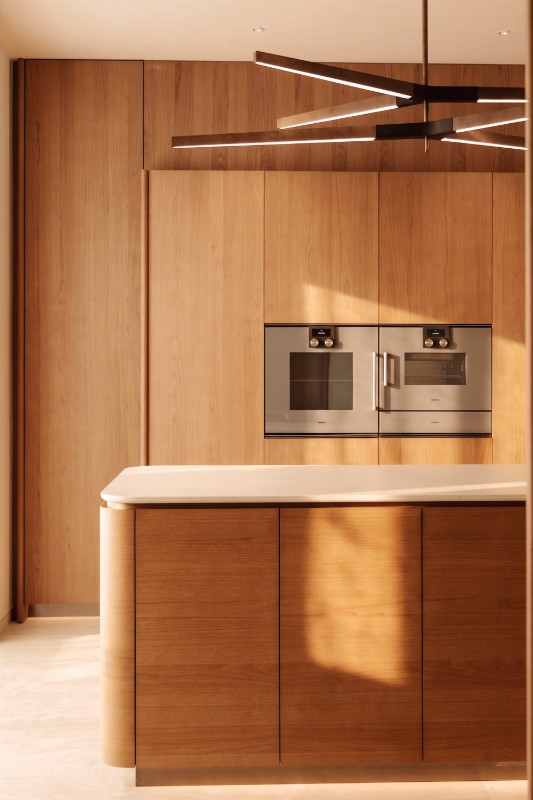
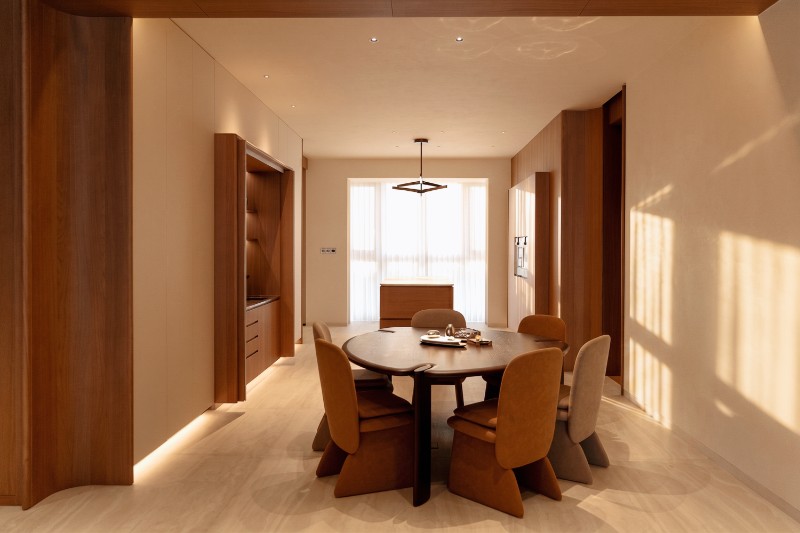
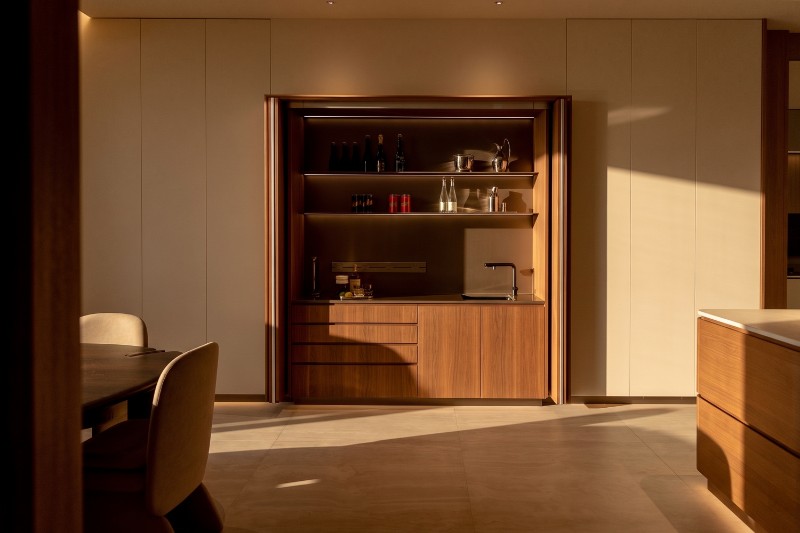
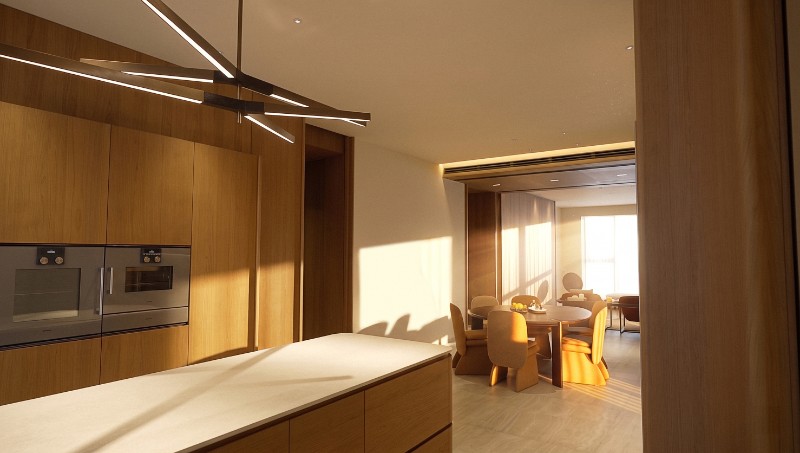
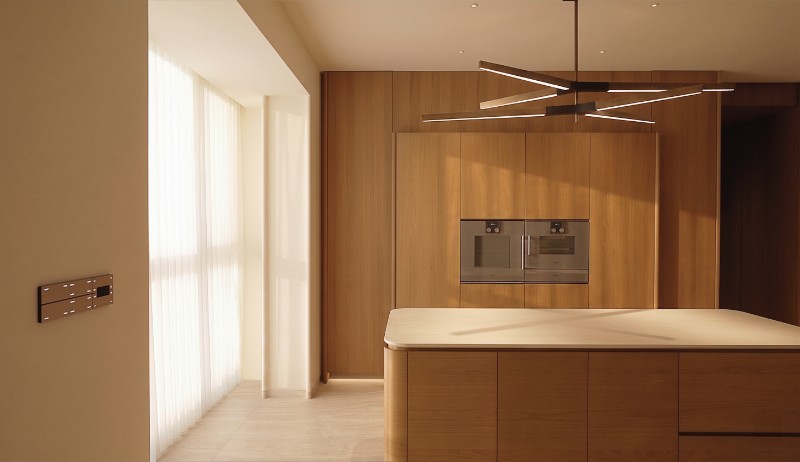
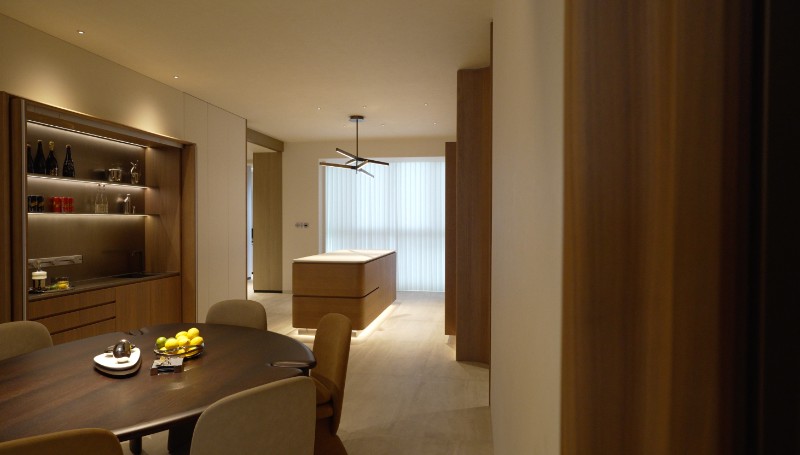
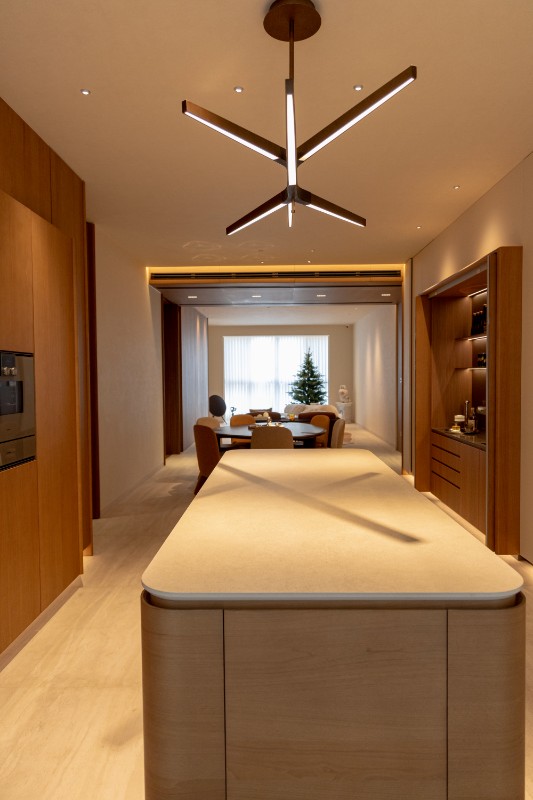
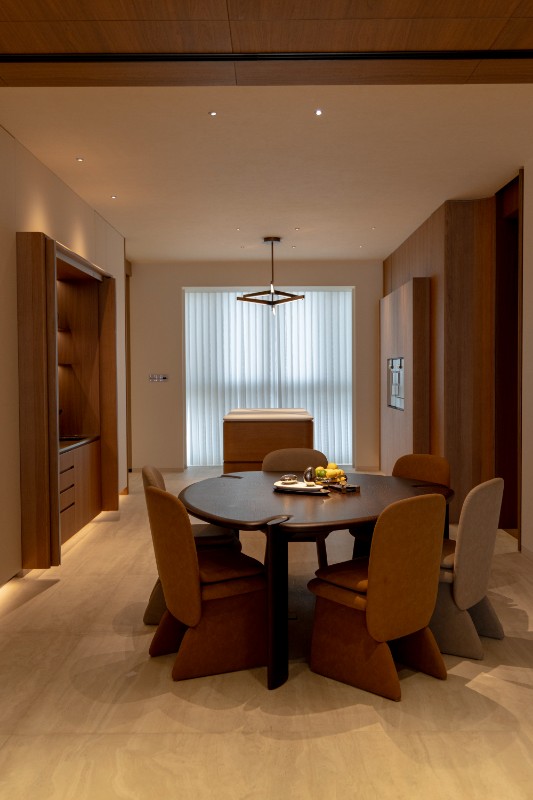
The open kitchen and dining area form her gentle interface with the world. Flowers and fruit upon the island anchor life in small, certain joys. The built-in wine cabinet holds more than vintages—it guards nights worth toasting, whether shared or savored alone. Here, conviviality is welcomed but not required; the space stands ready for gathering, yet equally embraces solitary sake by moonlight.
The Beauty of Imperfection
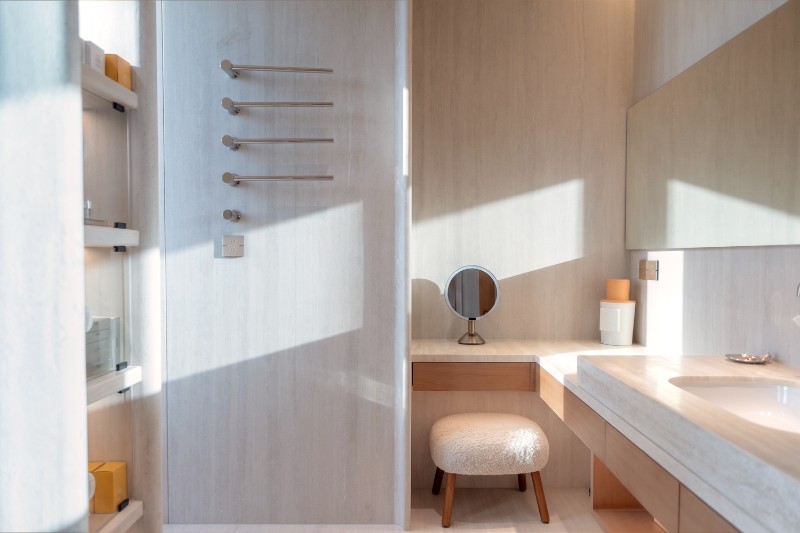
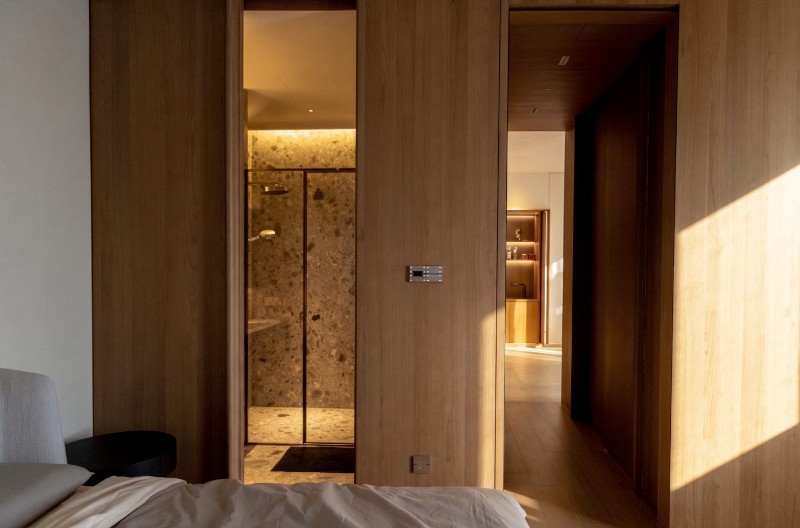
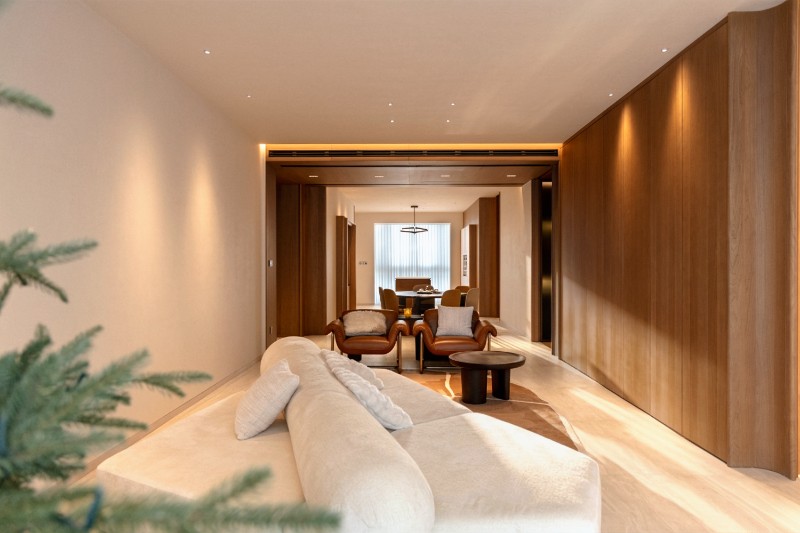
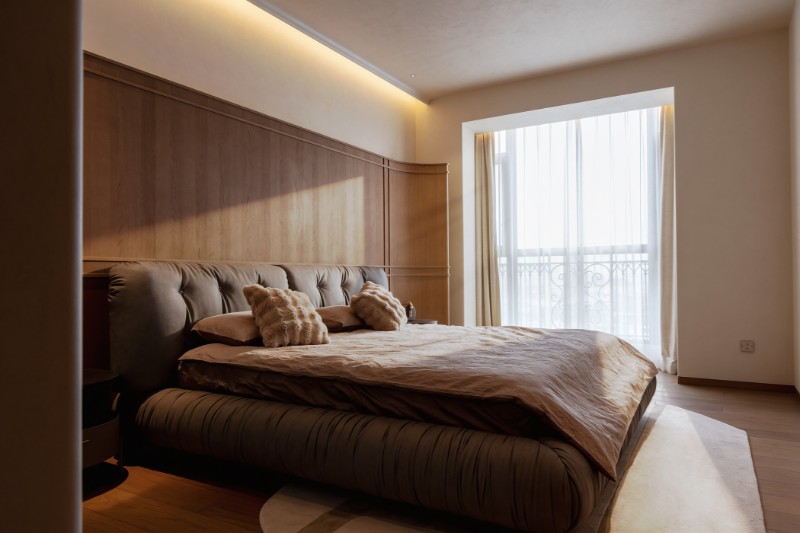
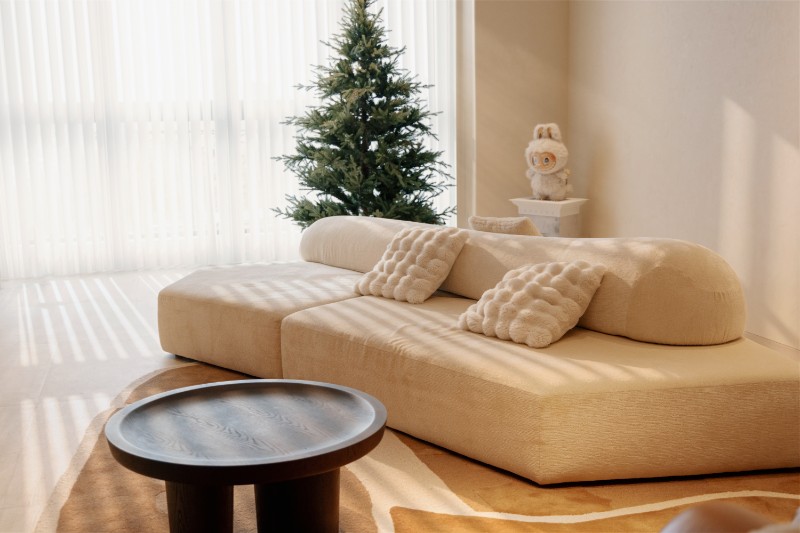
Wabi-sabi dwells in tender gazing upon the imperfect. The bedroom’s vertical slat wall bears wood grain like the palm-lines of years; bathroom terrazzo carries the poetry of time’s sediment; even the living room’s irregular wool rug refuses industrial precision. We deliberately preserved these “flaws,” for they remind us: life’s beauty hides in what cannot be replicated.
Stones and yellowed papers from her travels converse with chosen artworks—new and old, perfect and broken, costly and worthless coexist as equals.
The Practice of Light
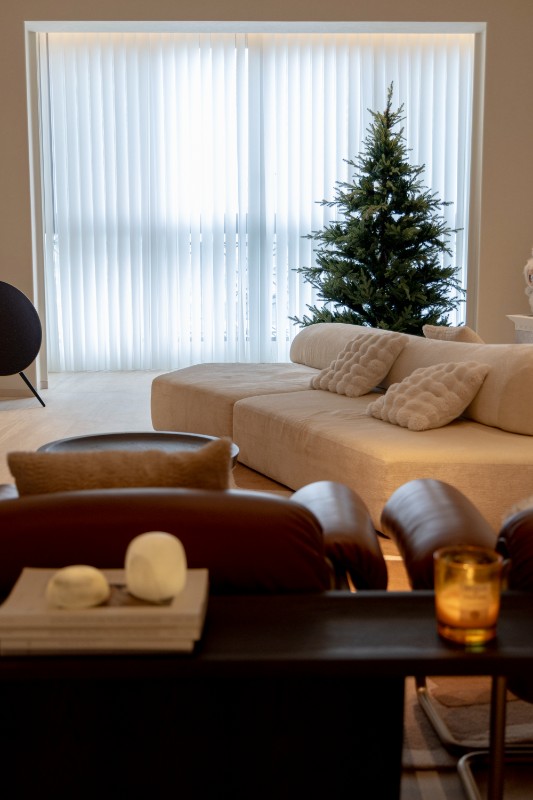
Lighting here embodies philosophy between “seeing” and “not seeing.” By day, floor-to-ceiling windows draw the skyline inward; she brews coffee in morning light, watching it traverse cream walls like a sundial marking hours. By night, concealed strips within cabinets, beneath beds, along baseboards illuminate from all directions—no longer judgment from above, but gentle support from everywhere. This indirect glow dissolves sharp shadows and the day’s tension.
She has learned to kindle but one lamp at dusk, letting rooms sink into twilight ambiguity where objects soften and thoughts become speakable.
The Richness of Solitude
Some call living alone lonely; she discovered another density. Bedroom textures invite bodily surrender; the built-in tub receives exhausted release; each wardrobe piece reflects deliberate choice—not ascetic minimalism, but examined selection. When material possessions reduce to true necessity, spirit finds space to grow.
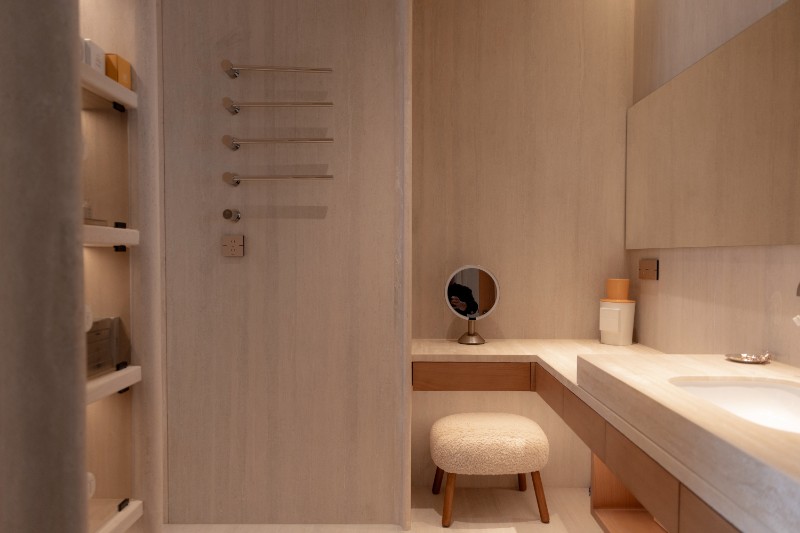
That stone washbasin, curved like river-worn pebble, offers nature’s temperature with every touch. Even the most mundane gesture deserves such tenderness.
Cultivation Within the World
Wabi-sabi is not cold renunciation, but clarity after abundance. Through this home, the owner declares her manner of world-being: no longer chasing trends, but seeking companions for growth; not refusing modern convenience, yet insisting on poetic pause within efficiency.
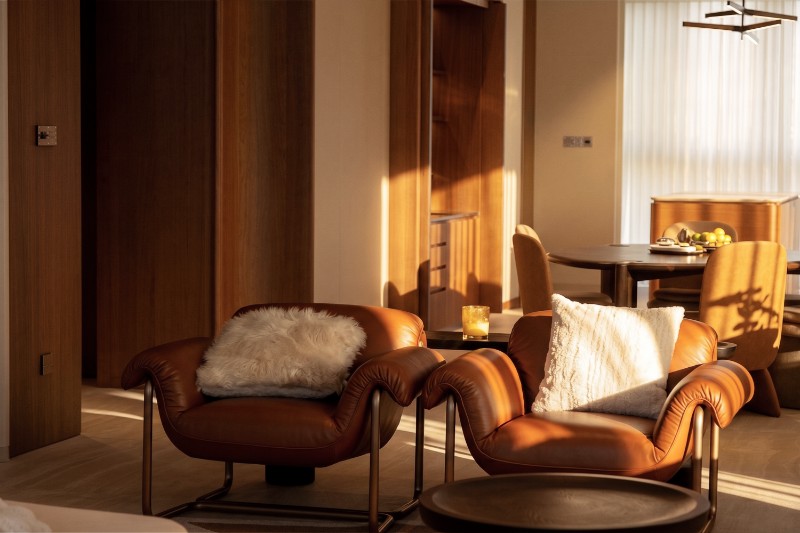
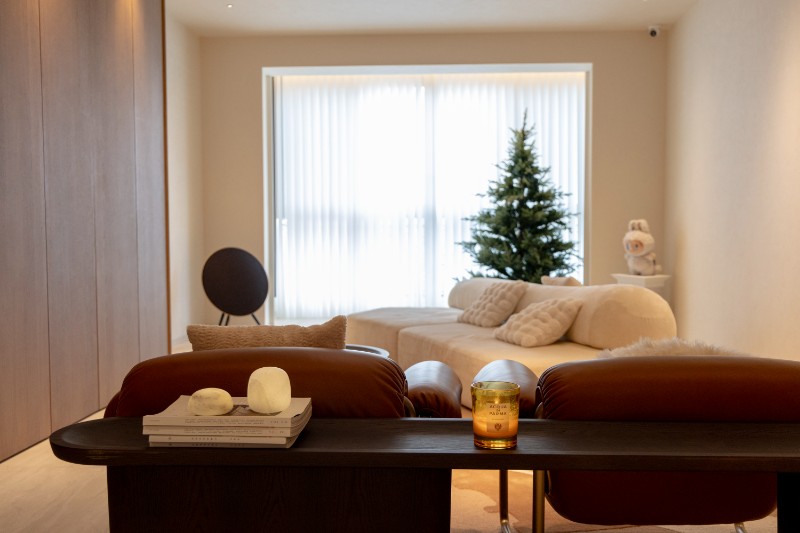
When night falls, she sometimes sits in the brown leather armchair, unlit, watching city lights flow beyond the window. Then she is both of this world and its witness—earthly wabi-sabi’s true meaning: not retreating to empty mountains, but cultivating a transcendent heart amidst bustle.
This home is her love letter to herself, a promise to coming years—may this constant warmth endure through all impermanence.